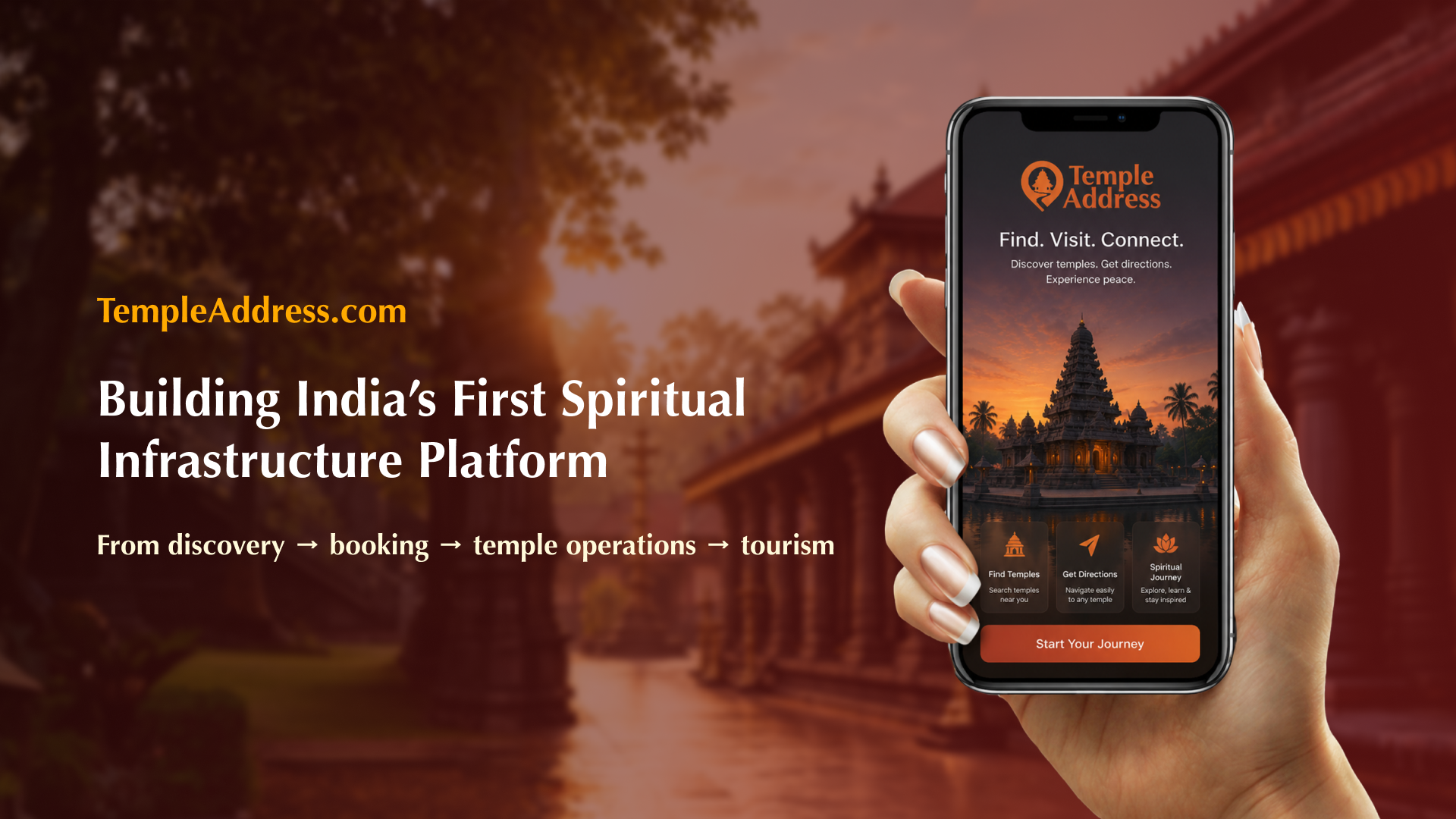
A booking system for temple rituals, built for devotees who have never installed an app.
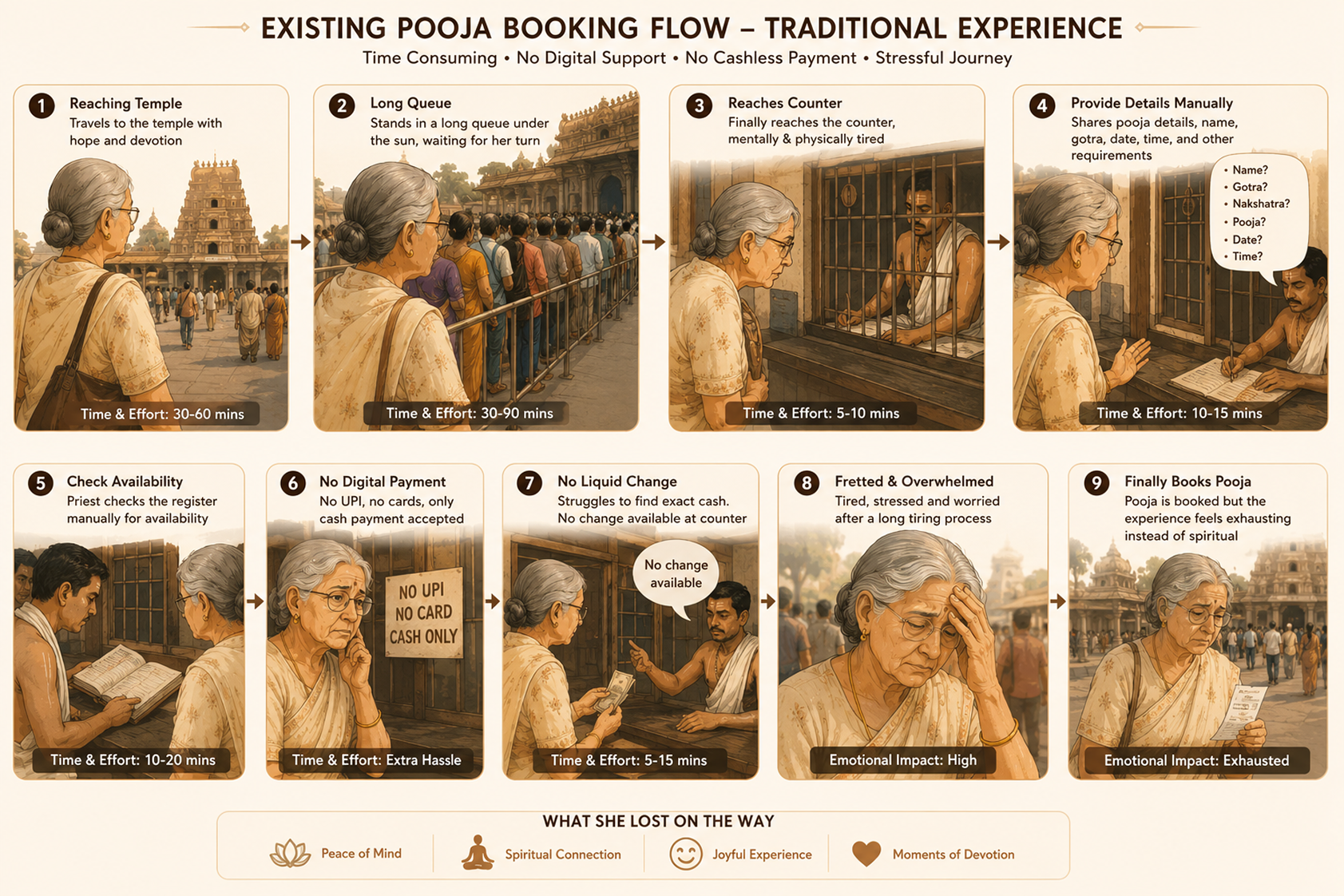
Temple information lives in Facebook groups, printed notices and WhatsApp forwards. When someone wants to book a pooja, they call the temple office and read out the details: which offering, what date, the devotee's name, their birth star. The office writes it in a ledger.
The person doing this is usually over 55, more comfortable in Malayalam than English, and has scanned a QR code before but never installed an app. On the temple side, one secretary fields 30–40 of these calls a day, most of them just asking for pooja timings.
"I had to call my cousin's friend just to find out what time the morning pooja starts. There should be an easier way."
Devotee, 58 · Thrissur · user interview
I ran interviews with 50+ devotees and 10+ temple administrators, sat in on bookings on-site, and read the temple WhatsApp groups people actually use. Four findings shaped every decision that followed.
People didn't avoid digital booking because it was hard. They avoided it because they couldn't tell if a page was the real temple. An unverified Facebook page made them fear the offering wouldn't actually happen.
The thing I was replacing wasn't another app — it was a conversation. "Which pooja? What time? Name is X, star is Y, book for my family too?" That call became the benchmark, not a generic booking form.
Every administrator said it: without the devotee's nakshatram, the priest can't personalise the ritual. Standard booking systems drop this field. It had to be required, and painless to enter.
On-site visitors were mostly 50–75, with limited smartphone familiarity. Designing for them — not a tech-savvy version of them — changed every screen.
| Method | Who | What it told us |
|---|---|---|
| Interviews | 50+ devotees, 30–75 yrs | Trust, not usability, is the adoption barrier |
| Stakeholder sessions | 10+ temple administrators | ~70% of calls are repeat schedule queries |
| Contextual inquiry | On-site visitors | Elderly users dominate; 55+ is the median |
| Community observation | Temple WhatsApp groups | Information is fragmented and unverifiable |
We first built the obvious thing: a full web portal and a companion mobile app. Rich UI, browsing, filters — what we assumed a modern temple platform should be. Then we put it in front of elderly devotees for acceptance testing.
It didn't work. Too many steps, unfamiliar patterns. One participant couldn't finish a booking without help. Another looked for the phone number to call instead. A committee member reframed the whole project in one sentence:
"They don't want a new app. They want the experience they already trust — just faster. They trust WhatsApp. They trust scanning the QR at the temple gate."
Temple committee member · Thrissur · second round
So we rebuilt around two ways people already behave, and shipped both.
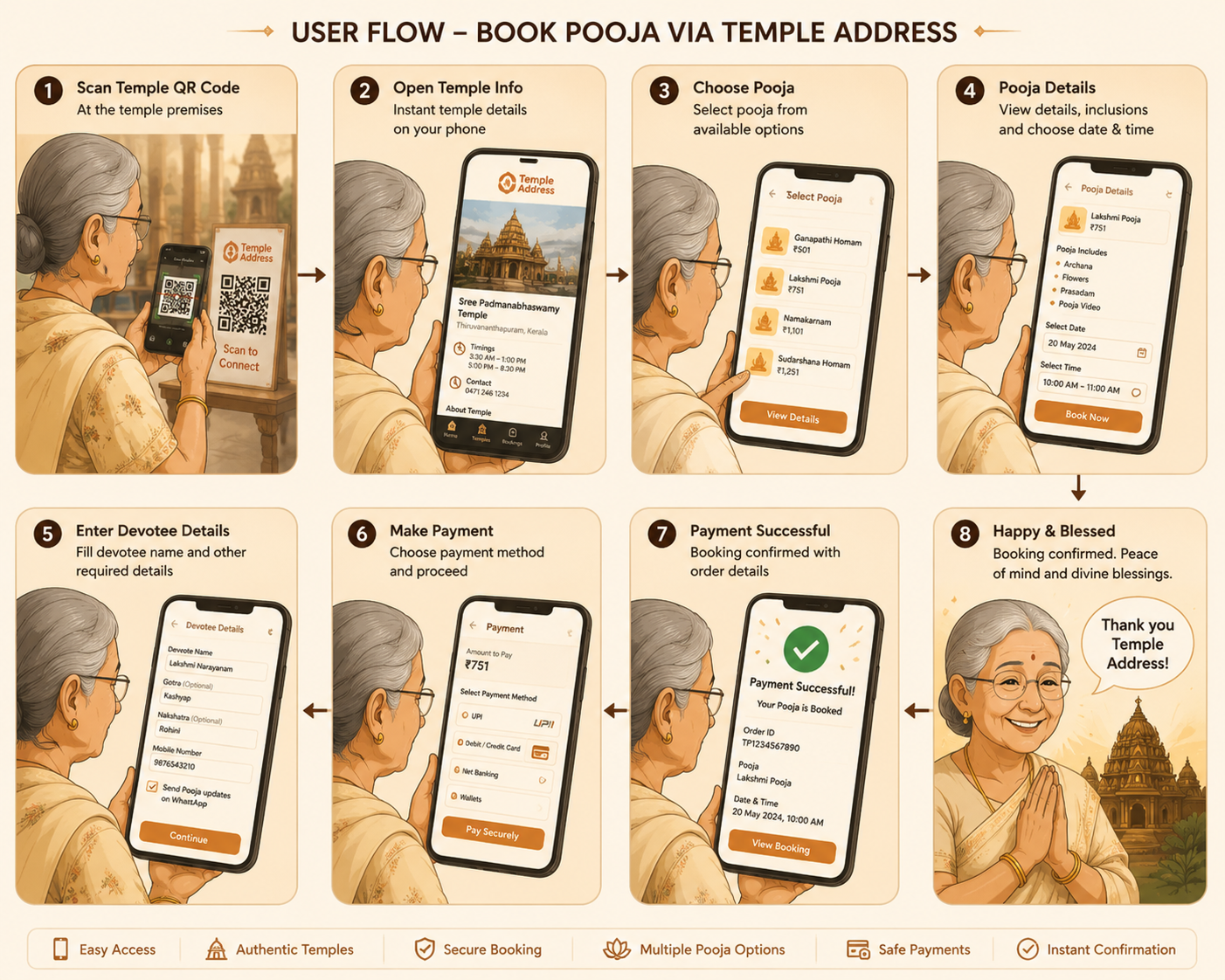
A printed QR at the temple entrance. Scan with the native camera — no download, no URL to type — and land on that temple's booking page. Being physically at the temple is the trust signal.
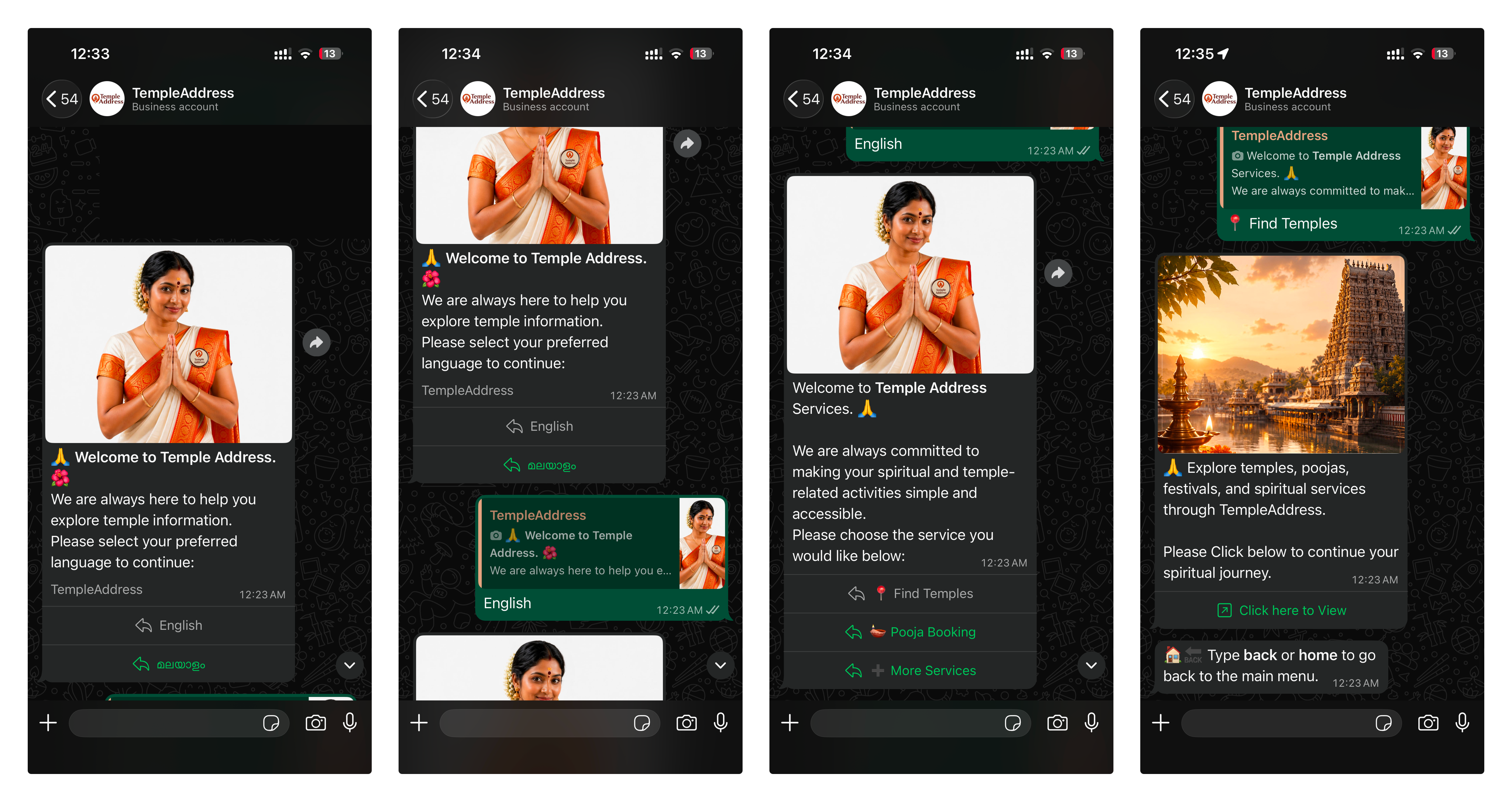
For devotees who never open a browser — NRIs, rural users — a WhatsApp assistant answers in their language and starts the booking, then hands off to the web page for payment via a single deep link.
A fully self-contained WhatsApp checkout was expensive to build and maintain, so the hybrid handoff — chat for discovery, web for the final steps — kept the backend simple while keeping the experience continuous.
Each step matches something the devotee would have said on the phone. Median completion is under two minutes.
Native camera, no install, no typing. Lands instantly.
Deity, timings, offerings. Physical presence verifies trust.
A list, not a grid — read like a menu. Name, time, price.
Passwordless, and only after choosing — intent before friction.
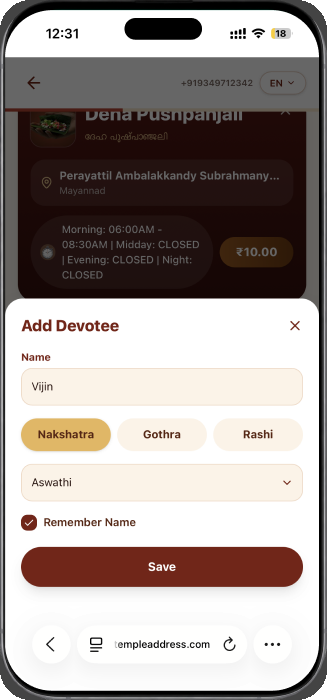
Name + birth star. Repeat for family in the same pattern.
Next seven days up front; full month behind a toggle.
Temple, offering, devotees, date, total. No surprises.
Booking ID and the temple's own number on confirmation.

Bilingual (Malayalam + English), mobile-first, in a terracotta and gold palette drawn from Kerala temple tradition — chosen so it reads as sacred, not as a generic booking tool.

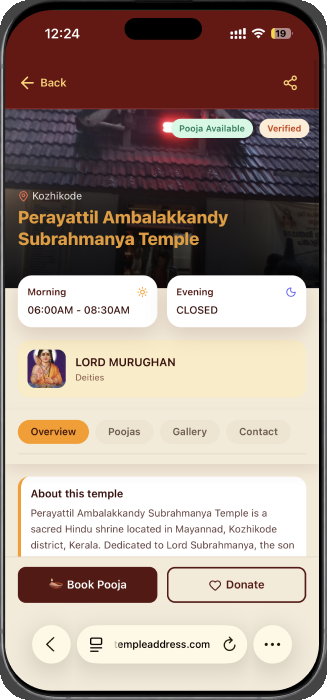
The QR landing page. Timings at a glance, a verified badge, and just two actions: Book Pooja, Donate.

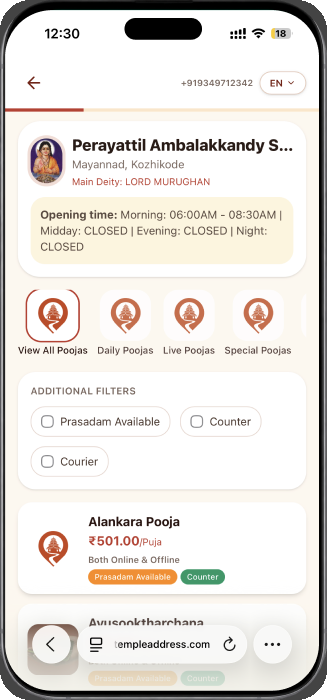
Poojas as a scannable list, not a grid. Each shows price, mode and what's included.

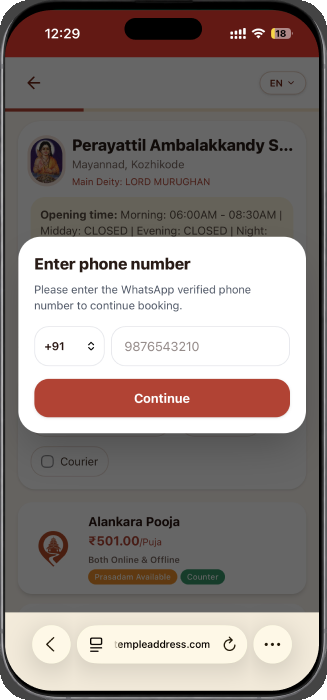
A WhatsApp-verified number in a bottom sheet, after the pooja is chosen — intent before friction.

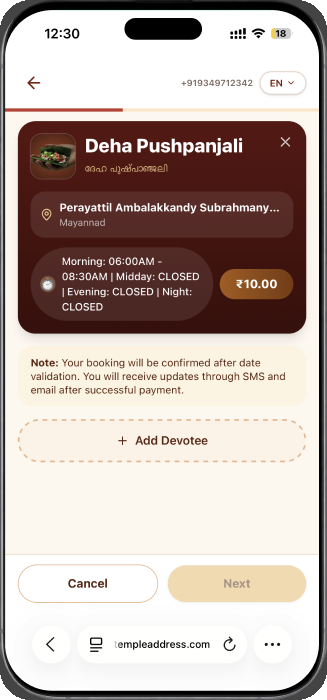
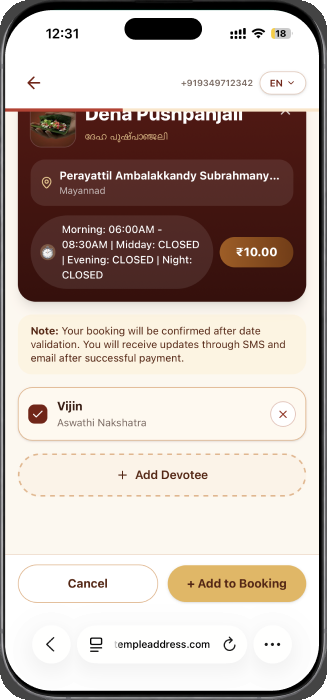
Exact pooja, temple, timing and price in one card. Add Devotee is the single next step.

Name plus the ritual identifiers a priest needs — searchable, not free-typed. "Remember" saves the profile.

Devotees listed and removable. The same pattern repeats for families, so cognitive load stays flat.
There are 27 nakshatrams — too many for a dropdown an elderly user would scroll. It's a search-as-you-type field, required, because the ritual depends on it. No other booking tool asks for it; the priests need it.
In testing, older users read a vertical list far more reliably than a grid of cards. It looks like the temple's printed menu, which is what they expect.
App-store download is a hard drop-off point: find the app, make an account, grant permissions. The QR at the gate becomes the interface instead. Any camera phone can book in under two minutes.
The phone-and-OTP step appears only once the devotee has chosen a pooja, so they're already committed. Asking to log in first would lose the exact user we were designing for.
For many devotees — especially overseas family and rural users — WhatsApp is the one digital surface they fully trust. The assistant answers temple questions and starts a booking in natural language, in Malayalam, Tamil or Hindi, pulling live temple data, then hands off to the web page for payment.

Every temple and devotee came from temples sharing their own QR codes. That's the signal that matters: if administrators are promoting it themselves, it's doing real work for them.
"Earlier I was getting 30 to 40 calls a day, just for pooja timings and booking. Now most of that comes through the app. I can focus on the temple work instead of the phone."
Temple secretary · Thrissur district · three months after onboarding
Instead of "what do you want from a booking system," I asked "walk me through how you book a pooja today." The answer — a phone call — became the benchmark. Match the conversation, don't reinvent it.
It was tempting to design for a younger, tech-fluent devotee. The real user was a 65-year-old who could scan a QR but had never downloaded an app. That constraint made the product better for everyone.
Putting the temple's own phone number on the confirmation screen did more for adoption than any interface polish. In a culturally sensitive product, you earn trust by being answerable at every step.